
News
April 20, 2026
DUC recognizes Manitoba farmers for outstanding agronomy
Winners from Souris, Nesbitt, Rapid City, Virden and Medora
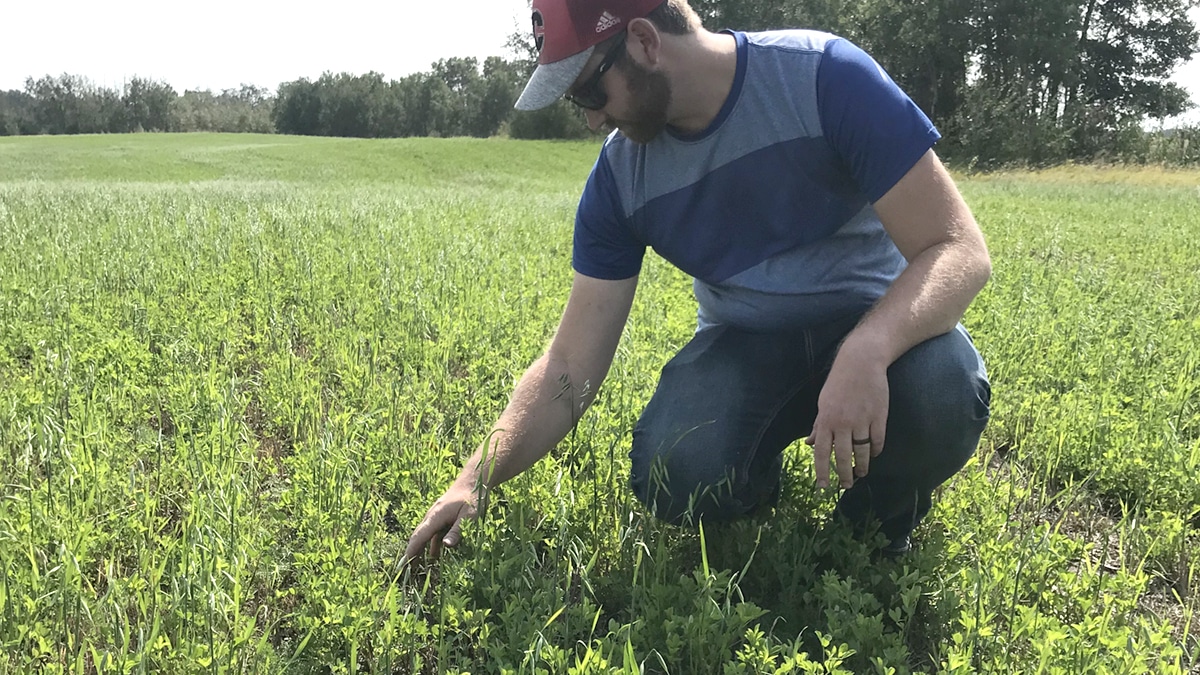
Five farms in southwestern Manitoba have been recognized by Ducks Unlimited Canada (DUC) for exemplary techniques in establishing perennial forages.
The Top Five winning fields displayed the highest plant density, height, diversity and lack of weeds in new acres seeded in 2025 through DUC’s Forage Program. The program pays farmers to grow forage crops on previously cultivated land.
“DUC has helped prairie farmers establish over 150,000 acres of forage in the past five years, making their land more profitable, resilient and biodiverse,” says Karli Reimer, DUC Head of Communications and Outreach – Prairies. “We applaud Manitoba’s Top Five producers for their achievements in converting cultivated fields to sustainable grasslands.”
Reimer says the awards are especially notable because 2026 is the International Year of Rangelands and Pastoralists, as designated by the United Nations. Rangelands cover about half of the world’s land and contain grasses and plants that can be grazed by livestock and wildlife. Pastoralists are people including farmers and ranchers who make their living from livestock raised on pastures and rangelands.
The Top 5
In 2025, landowners in DUC’s Forage Program seeded 3,200 acres in Manitoba and received nearly $400,000 in incentive payments. Among the 35 farms participating, these five were deemed to have the best establishments:
- Bos Family Farms, Rapid City, Man.
- Jura Farms Inc., Souris, Man.
- Matt Kozak, Nesbitt, Man.
- D & J Clarke Farms, Virden, Man.
- Triple V Ranch Ltd., Medora, Man.
Jean Born from Jura Farms believes heavy seeding without a cover crop contributed to their winning establishment. “We direct drilled the perennials without any cereal grain on May 6,” she recalls. “Used a heavy rate of 20 pounds per acre legume and five pounds per acre grass. We have some saline areas and, if you seed a little heavier, you will get something to catch there and fill in. Seeding heavy is an extra expense but pays for itself over time.”
“We found the Top Five all utilized some simple but important establishment tips,” notes DUC forage specialist Alex Griffiths. “They seeded diverse blends which included grasses and legumes to ensure something would grow under varying field conditions. They all seeded heavy at 15 pounds per acre or more to ensure a thick establishment that competes with weeds. And they all seeded without a greenfeed cover crop to reduce competition for sunlight, water and nutrients between the annual cereal crop and the perennial forage.”
Forage science
While farmers use perennial forages to feed livestock, environmental benefits include reducing soil compaction, building organic matter and increasing water-holding capacity. Perennial forages also capture and store more carbon than annual crops, which helps mitigate climate change. Research shows DUC’s Forage Program is helping bring back declining populations of grassland birds and waterfowl.
For farmers wondering whether a cover crop helps with forage establishment, recent research funded by DUC shows a reduced hay yield in the second year. An ongoing study that began in 2023 at Parkland Crop Diversification Foundation in Roblin, Man., found the first cut in year two can be nearly 1.5 tons higher using no cover crop, compared to a new forage stand seeded with two bushels per acre of oats. DUC recommends establishing a perennial forage without a nurse crop for a better stand and higher forage yields in the years following establishment. Read the science here.
Introduced in Manitoba in the 2011 crop year, the DUC Forage Program is funded in part by Manitoba’s Conservation Trust. Participating farmers receive $125 per acre to plant forages with top-up incentives awarded for best agronomic practices. Custom seed mixes and on-farm advice are also offered. The average producer payment in 2025 was $11,000.
If you are a Manitoba farmer wanting to apply for the 2026 crop year or find out more about DUC programs, call Alex Griffiths at 204-848-0514 or visit our programs page.